

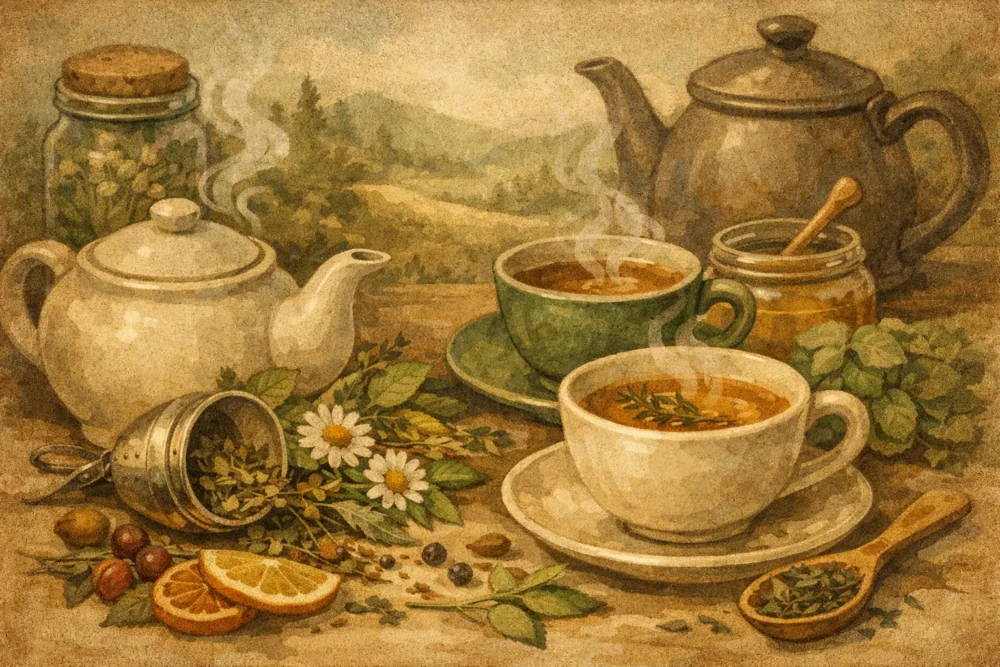
The kettle has clicked, your favourite mug is waiting, and that gorgeous pile of petals, leaves or spices smells far too good to waste on a weak, lukewarm brew. Herbal tea brewing is one of the easiest little rituals to get right, but it is also surprisingly easy to rush. Give your blend the proper water, time and space, and an ordinary cuppa becomes five calm, colourful minutes that feel properly yours.
Herbal blends are ideal for anyone who likes their daily comforts with more personality than a standard builder’s brew. Think zingy peppermint after a heavy lunch, chamomile when the evening needs softening, or a fruity hibiscus infusion that looks as dramatic as it tastes. No boring presents, no boring tea breaks either.
Herbal Tea Brewing Starts With the Blend
Despite the name, many herbal teas are technically infusions or tisanes rather than tea. They are usually caffeine-free combinations of dried flowers, fruit, herbs, roots and spices, rather than leaves from the tea plant. That matters because they can generally take hotter water and a longer steep than delicate green or white tea.
First, check whether you are working with loose herbs, a tea bag or a chunky fruit blend. A standard tea bag is portioned for one mug, while loose herbs need a little judgement. Start with one generous teaspoon per 250ml mug for fine leaves and flowers. For large pieces of dried fruit, chunky ginger or loose floral blends, use around two teaspoons. You want enough room for the ingredients to open up, rather than a sad pinch rattling around in an oversized pot.
Freshness counts, too. A cupboard full of half-forgotten herbal tea canisters may look delightfully witchy, but flavour fades over time. Keep blends sealed, dry and away from sunlight, heat and strong kitchen smells. Peppermint should smell bright and cooling. Chamomile should have an apple-like floral scent. If a blend smells dusty or oddly flat, it will probably taste that way in the cup.
Use Fresh Water and Let It Get Properly Hot
For most herbal infusions, freshly boiled water is the right call. Pour it over the blend while it is still close to boiling, ideally around 95-100°C. This gives tougher ingredients such as roots, bark, dried berries and spices enough heat to release their flavour.
There are exceptions. Very delicate flowers can taste a little rough if blasted with aggressively boiling water, particularly if the blend is mostly lavender, rose or elderflower. Let the kettle sit for a minute after boiling, then pour. If the packet gives instructions, treat those as the blend’s starting point. The maker knows whether the mix is packed with sturdy ginger chunks or fragile petals.
Water quality can make more difference than fancy kit. If your tap water is very hard or has a strong chlorine taste, it can mute the cleaner notes in mint, lemon balm and fruit blends. Filtered water is worth trying if your usual cuppa tastes a touch chalky. It is not a rule carved into a tea chest, though. Great herbal tea brewing should fit real life, not turn a Tuesday evening into a chemistry lesson.
Warm your mug or teapot first if you fancy a fuller, hotter infusion. Simply swirl a little hot water inside, then tip it away before adding your blend. This is especially useful in winter, when a cold ceramic mug can steal heat from the water before the herbs have had a fair chance.
Give Your Infusion Time to Do Its Thing
The biggest mistake is treating herbal tea like a quick dip-and-go black tea. Most blends need at least five minutes. Many are at their best after seven to ten minutes, especially fruit, rooibos, cinnamon, ginger and turmeric infusions.
Put a saucer or lid over your mug while it steeps. It might feel a bit grandmotherly, but it traps heat and the aromatic oils that make herbal blends smell so glorious. Those oils are part of the flavour, so letting them float off into the kitchen is a waste of good vibes.
Taste before you remove the leaves or bag. If it needs more oomph, give it another two minutes rather than automatically adding honey. If it tastes bitter, the issue may not be steeping time alone. Too much dried herb, stale ingredients or a blend containing naturally bitter botanicals can all be responsible.
Unlike black tea, plenty of herbal blends cope well with a long steep. Peppermint can become intense, and hibiscus can turn sharply tangy, but a ten-minute brew will not usually ruin them. Chamomile, rooibos and most fruit blends are generally forgiving. This is the joy of an infusion ritual: experiment until it tastes like your cup of tea, quite literally.
A quick timing guide
For straightforward everyday brewing, use five to seven minutes for peppermint, chamomile, lemon balm and light floral blends. Give eight to ten minutes to fruit teas, rooibos, ginger, turmeric, cinnamon and other spice-heavy mixes. If you are brewing a whole pot, add a minute or two because the larger volume loses heat more slowly but takes longer to pour and serve.
Choose the Right Mug, Pot or Infuser
You do not need a shelf of specialist equipment. A roomy mug, a decent infuser and a kettle will take you a long way. The key is giving loose ingredients room to move in the water. Tiny ball infusers are cute, but they can squash large leaves and fruit pieces into a cramped cage. A basket infuser or small teapot with a built-in filter tends to make a more generous brew.
For a solo cup, a wide infuser basket is fuss-free and easy to clean. For a slower evening ritual or a catch-up with a friend, use a teapot and strain as you pour. Glass pots are particularly lovely with colourful blends. Watching rose petals, citrus peel or ruby-red hibiscus swirl through the water is half the occasion.
If you make a big pot, remove the herbs once it reaches your preferred strength. Leaving them in for ages is fine with some blends, but it can make stronger ingredients dominate the party. You want the ginger to warm things up, not stage a full hostile takeover.
Make the Flavour Your Own
A good herbal infusion does not need sweetening, but there is no prize for drinking something you do not enjoy. Honey brings softness to chamomile, ginger and lemon blends. A slice of fresh lemon lifts mint and nettle. Orange peel works beautifully with rooibos and warming spices, while a splash of apple juice can round out tart berry teas.
Cold brewing is another brilliant option when hot drinks are not the mood. Add loose herbal tea to cold water, cover and leave it in the fridge for six to twelve hours. Fruit, mint and hibiscus blends are especially good this way. Strain, pour over ice and add fresh fruit if you are feeling fancy. The result is smoother and often less sharp than a hot brew cooled down in a hurry.
For something extra cosy, make a concentrated herbal brew with half the usual water, then top it up with warmed oat milk. Rooibos, chai-style spice blends and vanilla-led infusions work particularly well. Delicate citrus or hibiscus teas usually do not, as milk can flatten their bright flavour or split when acidity gets involved. It depends on the blend, so treat your first mug as a delicious experiment.
Small Fixes for Common Brewing Blunders
If your herbal tea tastes weak, use more ingredients before steeping it forever. A light blend may simply need a heaped teaspoon rather than a level one. Also check that your water was hot enough and that you covered the mug while brewing.
If it tastes bitter or medicinal, reduce the quantity slightly next time, shorten the steep for mint-heavy blends, or try a cooler pour for delicate flowers. Some blends are naturally earthy or bitter, particularly those made with dandelion, nettle or certain roots. A little lemon, honey or a sweeter companion ingredient can make them more your thing.
If it tastes bland despite following the instructions, look at the water and the tea itself. Old blends, overfilled tea bags stored in damp cupboards and water that has been repeatedly boiled can all leave a cup lacking sparkle. Fresh water and a fresh blend solve more problems than a cupboard full of complicated gadgets.
Herbal tea also makes a cracking gift when paired with a beautiful mug, a cosy pair of socks or a candle for full sofa-nest energy. A colourful tea ritual is not just about the drink. It is a small, useful way to say, take a breath, you deserve something lovely. That is very much the Funky Stride approach to everyday treats.
Next time you put the kettle on, give the blend an extra few minutes, pop a lid over the mug and enjoy the little bit of ceremony. The best brew is not necessarily the most technical one. It is the one that makes you pause, smile and reach for the same wonderfully weird mug tomorrow.
Herbal Tea Brewing Summary
| Blend Type | Recommended Temperature | Ideal Steep Time | Measurement (per 250ml) |
| Light Florals (Chamomile, Lavender) | Just off the boil (approx 90°C) | 5 to 7 minutes | 1 generous teaspoon |
| Herbs and Mint (Peppermint, Lemon Balm) | Freshly boiled (95-100°C) | 5 to 7 minutes | 1 generous teaspoon |
| Fruit and Berries (Hibiscus, Berry Blends) | Freshly boiled (95-100°C) | 8 to 10 minutes | 2 teaspoons (chunky pieces) |
| Roots and Spices (Ginger, Turmeric, Rooibos) | Freshly boiled (95-100°C) | 8 to 10 minutes | 2 teaspoons (chunky pieces) |
Herbal Tea Brewing QandA
1. Why is it technically incorrect to refer to many herbal teas as true “tea”?
Most herbal teas are actually infusions or tisanes because they are caffeine-free combinations of dried flowers, fruit, herbs, roots, and spices rather than leaves from the Camellia sinensis tea plant.
2. What is the main reason for covering a mug with a saucer or lid while herbal tea steeps?
It traps heat and the essential aromatic oils that make herbal blends smell and taste glorious, preventing them from floating off into the kitchen.
3. Why should you avoid using tiny ball infusers for chunky fruit or large leaf herbal blends?
They can squash ingredients into a cramped cage, preventing the water from circulating and allowing the botanicals to fully open up and release their flavour.
4. How can you properly cold brew herbal tea for warmer days?
Add loose herbal tea to cold water, cover, and leave it in the fridge for six to twelve hours—fruit, mint, and hibiscus blends work especially well this way before being poured over ice.
5. Which types of herbal blends should you avoid mixing with milk?
Delicate citrus or hibiscus teas should generally avoid milk because their acidity can cause the milk to split, or it can flatten their bright flavours.