

A tiny curl of smoke can change the feel of a room faster than a new cushion ever could. But when choosing incense sticks vs cones, the question is not simply which one smells nicest. It is about how you like to unwind, how much fragrance your space can handle, and whether you want a gentle background aroma or a full-on atmospheric moment.
For a yoga corner, an evening bath, a gift hamper or a living room that needs less bland and more personality, both forms bring their own magic. Here is how to pick your fragrant sidekick without accidentally turning your flat into a fog machine.
Incense sticks vs Incense cones: the key difference
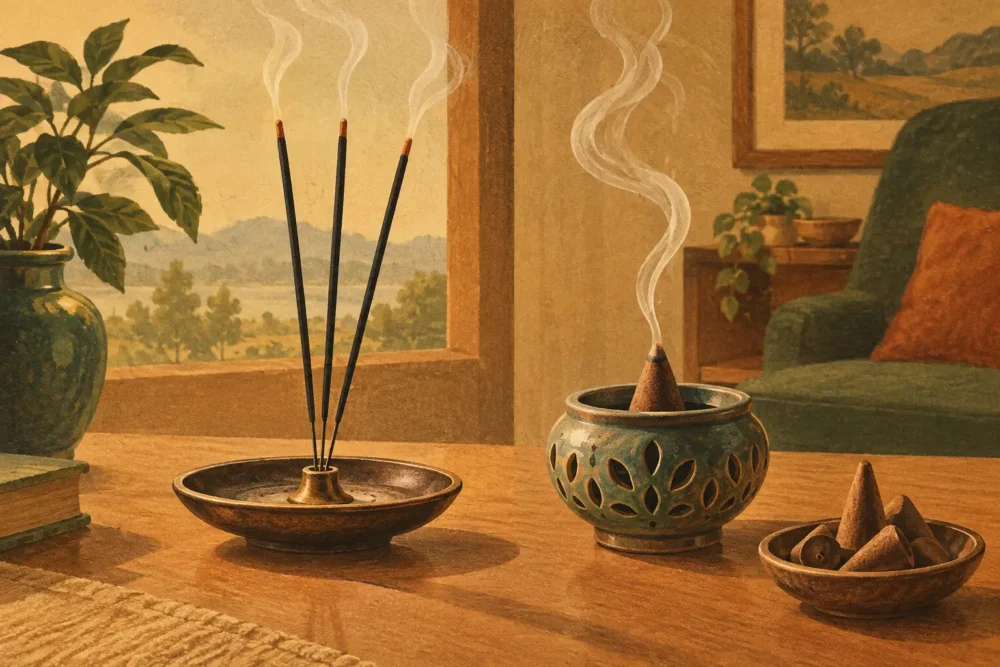
Incense sticks are made from fragrant material rolled around a thin bamboo core. Light the coated end, let the flame catch for a few seconds, then gently blow it out. The stick will smoulder slowly, releasing scent as it burns down.
Cones are compact, self-contained little pyramids of incense. They do not have a bamboo centre, so the fragrance comes from the cone itself. Once lit and blown out, they tend to create a denser stream of smoke and a more immediate scent throw.
Neither is automatically better. Sticks are usually the easy-going choice for everyday scenting, while cones tend to make more of an entrance. Think mellow playlist versus dramatic festival headliner.
Burn time and fragrance strength
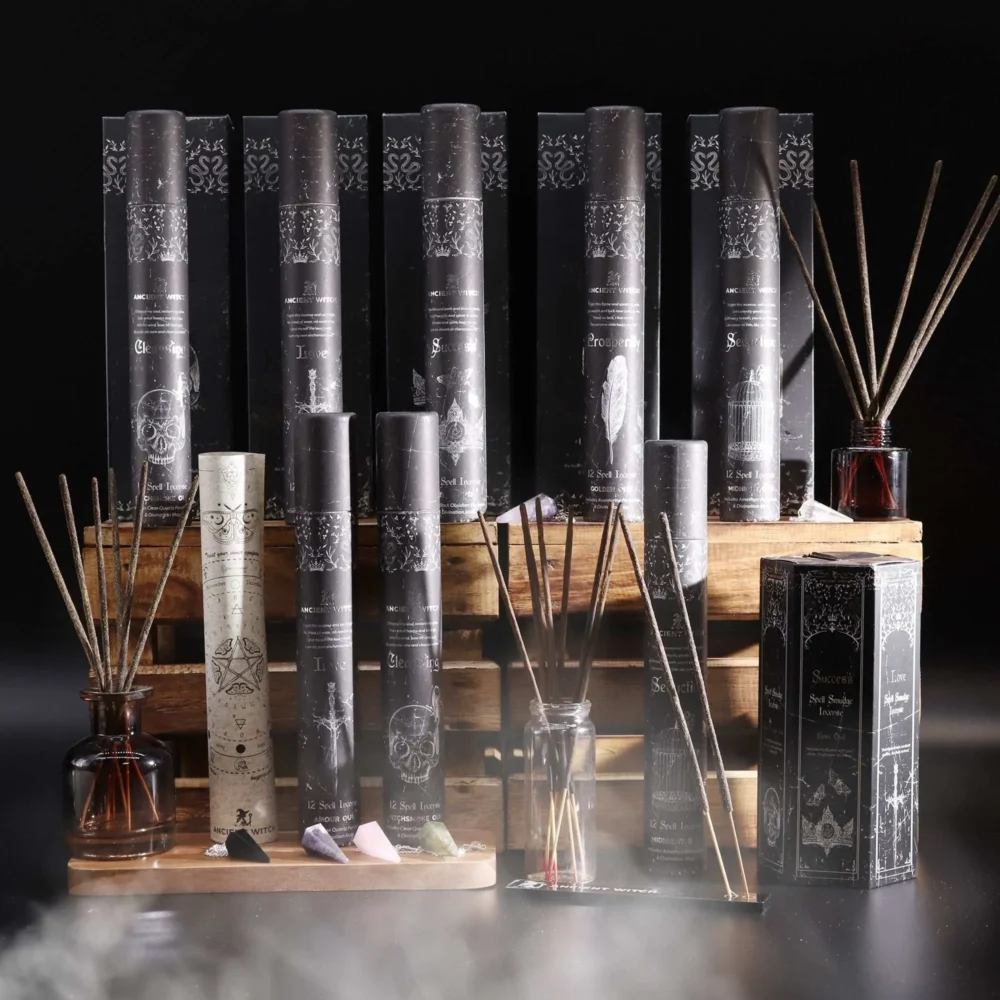
A standard incense stick often burns for around 30 to 45 minutes, though this varies by thickness and blend. That makes it ideal when you want to settle in with a book, stretch through a yoga session or give your home a gentle aromatic lift while you potter about.
A regular cone commonly burns for around 20 to 30 minutes. Its shorter burn does not mean less impact. Because cones are more concentrated, they can fill a small room quickly. If you are after a bold hit of sandalwood, patchouli, nag champa or warming spice, cones can be brilliant.
There is a trade-off. A strong cone can feel a bit much in a compact bedroom, particularly with windows closed and pets or housemates nearby. In that setting, a stick offers more control. Light one, enjoy it for a little while, then extinguish it safely if the scent has reached your sweet spot.
Fragrance also depends on the quality and ingredients of the incense, not merely the shape. Natural resins, woods, herbs and essential oils all behave differently from synthetic fragrance blends. A floral stick may smell soft and airy; a resin-rich cone can have a deeper, earthier character. Choose the scent profile you actually enjoy rather than assuming cones are always intense and sticks are always subtle.
What about backflow cones?
Backflow cones deserve their own mention because they are designed for a visual show. Used with a backflow burner, their smoke flows downwards like a miniature misty waterfall. They look wonderfully witchy on a shelf, side table or altar and make a memorable present for anyone who loves spiritual homeware with a bit of theatre.
They are not the same as standard cones, though. Backflow incense can leave an oily residue on the burner and nearby surface, so use it on a heat-safe tray and clean the holder after use. The fragrance is part of the experience, but the dramatic smoke effect is the main event.

Which is easier to use?
Sticks win for everyday simplicity. Place one in a proper holder, light it, and the ash should fall neatly into the tray or dish beneath. Stick holders come in plenty of expressive styles too, from celestial and mystical designs to colourful ceramic pieces that earn their place in the room even when nothing is burning.
Cones need a holder with a heatproof, flat surface and enough depth to catch ash. A small ceramic dish can work for a standard cone, but a dedicated cone burner is tidier and more reliable. Never balance a cone on a random saucer, a stack of books or the edge of a windowsill. Gorgeous ambience is not worth singeing your décor.
Both formats need the same basic care: keep them away from curtains, paper, dried flowers and anything else flammable; place them out of reach of children and pets; never leave them unattended; and make sure they are fully extinguished before leaving the room or heading to bed. Open a window if the smoke feels heavy. Incense is there to make your space feel good, not to test your fire alarm’s vocal range.
Sticks for slow rituals, cones for a quick mood shift
Your routine matters more than rules. Incense sticks are particularly good for longer, low-key rituals. Perhaps you light one while journalling in the morning, making herbal tea after work, or setting the scene before friends come round. The gradual burn feels unhurried and creates a thread of fragrance rather than a sudden blast.
Cones suit shorter, more deliberate moments. You might light one before meditation, during a bath, while pulling cards, or when you want to reset the feel of a room after a long day. They are also handy when you want fragrance but do not have 45 minutes to spare.
For gifting, consider the recipient rather than choosing the most elaborate-looking option. A cone burner and a few beautiful cones make a proper little ritual set for someone drawn to crystals, moon phases and cosy spiritual corners. A varied set of incense sticks can be friendlier for someone new to incense, especially if they enjoy trying different scents without committing to a more powerful burn.
Smoke, scent and smaller spaces
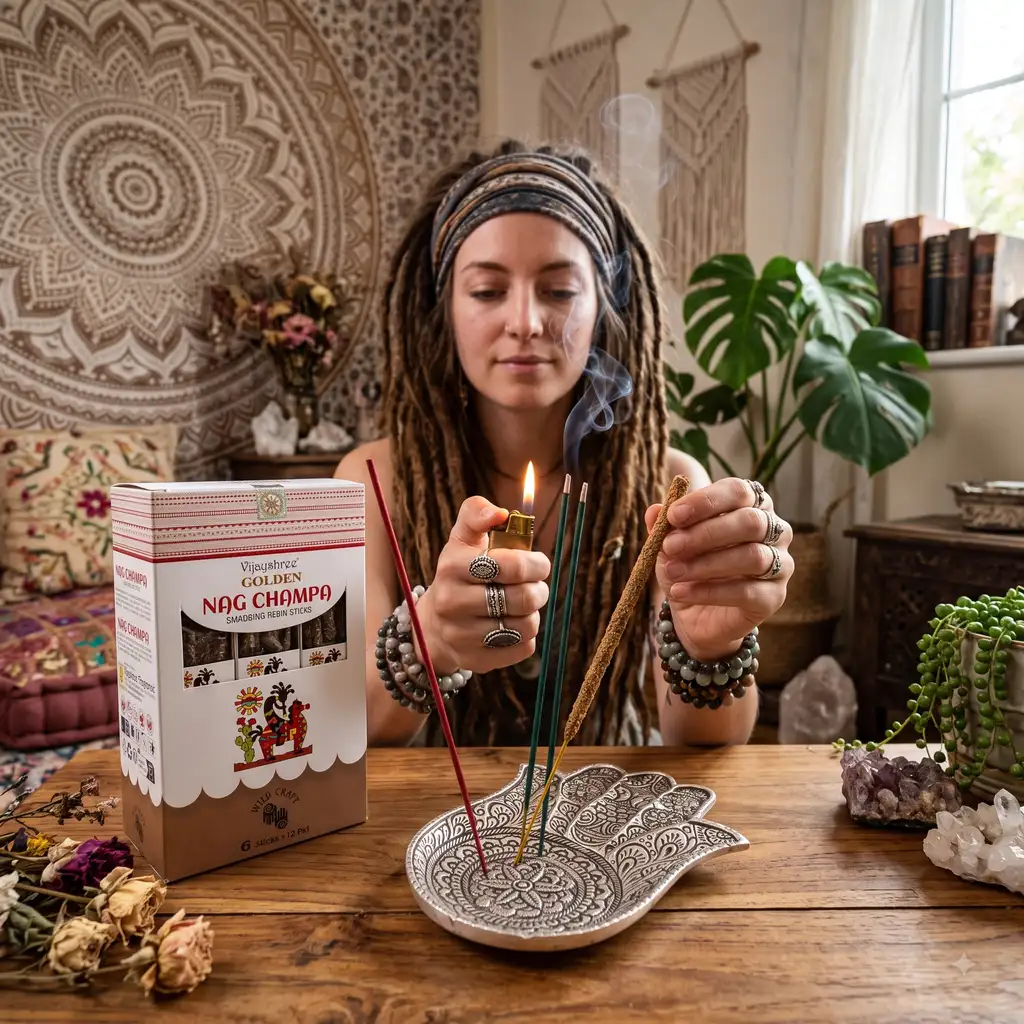
If you live in a studio flat, share a house, or have a room with limited airflow, start gently. One stick can be plenty, and it may be worth burning it near a cracked window. Avoid lighting multiple pieces at once unless you know the space handles it well.
Cones are completely workable in small rooms, but use them with a lighter hand. Choose one cone, not several, and give the scent time to settle. People often make incense feel overpowering by adding more before the first fragrance has had a chance to travel.
Be thoughtful around anyone with asthma, fragrance sensitivities or respiratory concerns. Smoke can be irritating for some people, so ask before burning incense in shared spaces and choose another form of home fragrance when it is not suitable. The best vibe is one everybody can breathe easy in.
How to choose your incense holder
Your holder is not an afterthought. It is the practical bit that lets the fun happen safely, and it can add serious character to your home.
For sticks, choose a holder that is longer than the stick and has a raised edge or wide tray to catch falling ash. For cones, look for a non-flammable burner with a stable base and a shallow bowl or plate. For backflow cones, only use a purpose-made backflow burner, ideally on a protective surface.
If your home leans colourful, gothic, bohemian or beautifully mismatched, lean into it. Incense accessories do not have to disappear into the background. A moon-shaped dish, a cheerful ceramic burner or an ornate little holder can turn a simple wind-down into a corner of your home that feels entirely yours.
So, should you buy sticks or cones?
Choose sticks if you want a longer burn, gentler fragrance and an easy everyday ritual. They are the relaxed all-rounders: simple to use, lovely for slow evenings and easy to match with different scents as your mood changes.
Choose cones if you want a richer burst of aroma, a shorter burn or a more ceremonial feel. They work especially well for intentional moments and for gifts that deserve more than a predictable candle. Go for backflow cones when you want scent with a side of smoky spectacle.
The most fun answer is to keep both on hand. A few sticks for the everyday exhale, a few cones for when the mood calls for something deeper, darker or just a little more funky. Your home does not need to smell like everyone else’s – let it smell like your favourite version of you.
| Feature / Category | Incense Sticks | Incense Cones | Backflow Cones |
| Design & Structure | Fragrant material rolled around a thin bamboo core. | Compact, self-contained little pyramids without a bamboo centre. | Specialised cones designed to be used with a backflow burner for a visual show. |
| Burn Time | Around 30 to 45 minutes (varies by thickness and blend). | Around 20 to 30 minutes. | Varies, similar to standard cones but engineered for downward-flowing smoke. |
| Fragrance & Smoke Impact | Gentler background aroma, easy-going choice for everyday scenting. | Denser stream of smoke and more immediate, concentrated scent throw. | Provides fragrance alongside a dramatic, waterfall-like visual effect. |
| Ideal Ritual Use | Longer, low-key rituals (journalling, making tea, welcoming friends). | Shorter, more deliberate moments (meditation, baths, quick room resets). | Theatrical home decor moments, altar displays, and spiritual homeware gifts. |
| Safety & Care | Use a proper holder with a wide tray to catch falling ash neatly. | Needs a holder with a heatproof, flat surface and depth to catch ash safely. | Can leave an oily residue; use on a heat-safe tray with a purpose-made backflow burner. |
Incense Sticks vs. Incense Cones: Product & Usage Q&A
Q: What is the main structural difference between incense sticks and cones?
A: Incense sticks are built around a thin bamboo core, whereas cones are compact, self-contained pyramids of incense with no centre core.
Q: Which option burns longer, sticks or standard cones?
A: Sticks typically burn for about 30 to 45 minutes, making them ideal for a slower burn, while standard cones usually burn for around 20 to 30 minutes.
Q: Are cones better for small spaces?
A: Cones can feel quite intense or powerful in a compact room because they concentrate fragrance quickly. Sticks offer more control in smaller or shared spaces since you can extinguish them early if needed.
Q: What makes backflow cones different from regular cones?
A: Backflow cones are designed for use with a specific backflow burner, causing their smoke to flow downwards like a miniature misty waterfall for a theatrical visual effect.
Q: What safety precautions should be taken when burning incense?
A: Always keep them away from curtains, paper, and flammable items, place them out of reach of children and pets, never leave them unattended, and make sure they are fully extinguished before leaving the room.