

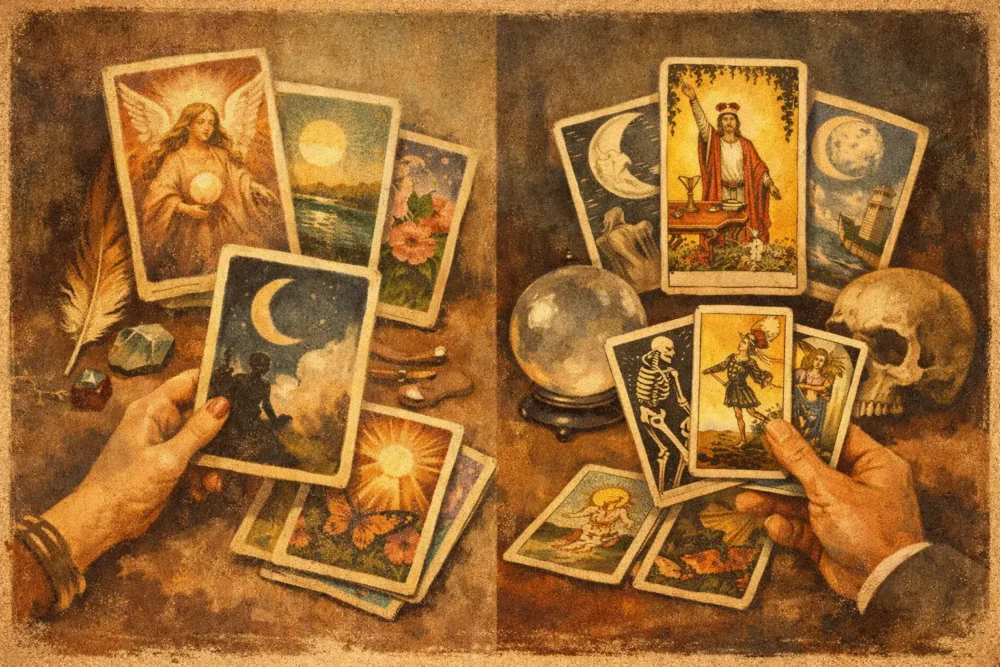
You are standing in front of a shelf of beautiful decks: one is packed with moon phases, affirmations and wildflower artwork; the other has mysterious figures, swords, cups and a suitably dramatic Death card. The oracle cards vs tarot question is not about which one is more magical, more serious or more ‘correct’. It is about what kind of guidance, ritual and visual joy you want from a deck.
Whether you are choosing your first set of cards, finding a thoughtful birthday gift, or adding a little cosmic character to someone’s self-care routine, both can make brilliant companions. The trick is knowing what is inside the box – and what the recipient will actually enjoy using.
Oracle Cards vs Tarot: The Big Difference
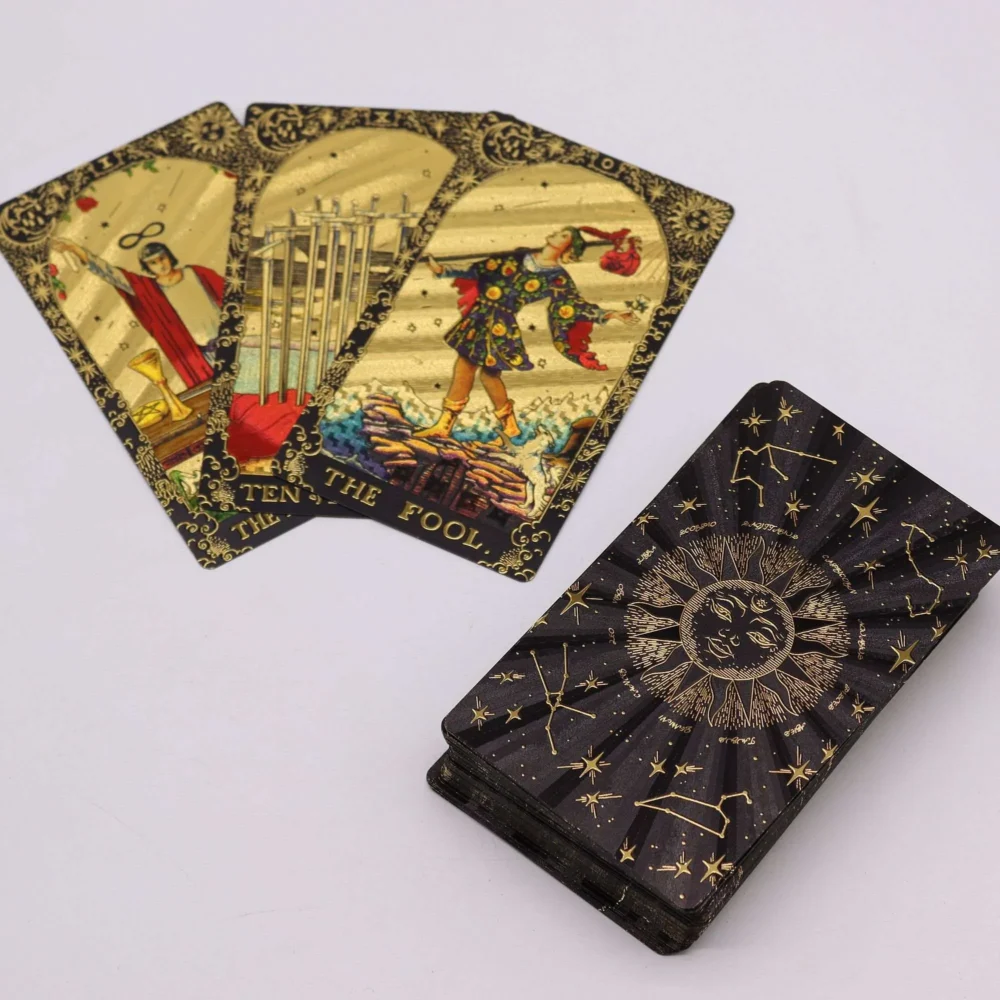
Tarot follows a traditional system. A standard tarot deck has 78 cards: 22 Major Arcana cards, such as The Fool, The Lovers and The Moon, plus 56 Minor Arcana cards divided into four suits. Those suits are usually Cups, Wands, Swords and Pentacles, each with numbered cards and court cards. Different artists can give the deck a fresh look, but the underlying structure remains recognisable.
Oracle decks are much freer. They might contain 36, 44, 52 or any other number of cards. Their themes can be centred on angels, crystals, animals, chakras, goddesses, plants, moon rituals, affirmations or something gloriously niche. There is no fixed set of meanings that every oracle deck must follow. The creator decides the theme, the messages and the number of cards.
That makes tarot more like learning a rich symbolic language. Oracle cards are more like receiving a themed prompt from a wise, colourful friend. Neither is better. They simply offer different routes into reflection.
Tarot Has Depth, Pattern and a Little Homework
People are often drawn to tarot because it gives detailed readings. A spread can explore the emotional roots of a situation, the practical obstacle, the energy around it and a possible next step. The card meanings build on one another, so over time you begin to notice patterns. A run of Swords may point to busy thoughts or difficult conversations; an abundance of Pentacles might pull the focus towards work, money or home life.
There is a learning curve, and that is part of the charm for many readers. You do not have to memorise all 78 meanings before touching a deck. Start with the imagery, use the guidebook, and let your own observations join the traditional interpretations. Still, tarot tends to reward curiosity and regular practice.
It can suit someone who enjoys journalling, mythology, symbolism or a good deep chat over a cup of tea. It also works well for people who want a deck they can keep returning to for years without it feeling repetitive.
The trade-off is that tarot can feel intimidating at first. Some people see cards like The Tower, Ten of Swords or Death and assume they have drawn a cosmic disaster warning. Usually, these cards speak about change, endings, upheaval or releasing what has run its course – not a literal prediction. A good tarot practice is reflective, not fear-fuelled.
Oracle Cards Are Friendly, Flexible and Instantly Usable
Oracle decks are often the easier choice for beginners, especially if the person opening the gift wants encouragement rather than a study project. Many cards feature a clear phrase or message, such as ‘Trust your path’, ‘Rest’, ‘Speak your truth’ or ‘New beginnings’. Pull a card in the morning, place it beside a candle, or use it as a gentle nudge during a journalling session.
Because every deck has its own system, choosing the theme matters. A moon oracle deck may suit someone who loves rituals and following lunar cycles. Animal spirit cards can be a lovely fit for a nature lover. An affirmation deck can bring a welcome bit of brightness to a friend going through a tricky patch. There are decks for astrology fans, crystal collectors, yoga regulars and people whose idea of self-care includes incense, a blanket and a firm refusal to answer emails after six.
The freedom is fabulous, but it means oracle readings are usually less layered than tarot. You may get a powerful message, though you are less likely to have the established card combinations and detailed narrative that tarot offers. For some people, that is exactly the point. They want clarity without turning a five-minute card pull into an evening of research.
Which Is Better for a First Deck?
Choose oracle cards if the priority is ease, uplifting messages and artwork that feels personal. They are brilliant for someone who is spiritual-curious, enjoys wellness rituals, or simply wants a moment of calm in a loud week. A deck with straightforward wording makes it easy to start without worrying about getting it wrong.
Choose tarot if the recipient likes stories, symbols and learning new things. A beginner-friendly deck with clear illustrations and a decent guidebook is a strong place to start. The classic Rider-Waite-Smith style is particularly useful because so many learning resources use its imagery, but a deck does not need to look old-fashioned to be meaningful. There are modern, inclusive and wonderfully bold versions that feel far more at home on a colourful coffee table.
If you are buying for somebody else and cannot decide, think about their existing interests. The friend who has three journals, loves a full moon bath and sends voice notes about ‘protecting their peace’ may adore an oracle deck. The person who loves folklore, psychology, creative writing or puzzles may get hooked on tarot.
And if they already own one type? The other can be a cracking complementary gift. Plenty of readers pull an oracle card for the overall mood, then use tarot to explore the detail beneath it.
Do You Need to Be Psychic?
Absolutely not. Cards can be used as a tool for intuition, self-reflection and conversation. You might ask, ‘What should I pay attention to today?’ then notice what the imagery brings up for you. Perhaps a card about boundaries reminds you to say no to a draining plan. Perhaps a card about creativity is the nudge you needed to pick up your paints again.
Some people hold spiritual beliefs around card reading; others treat it as a mindful prompt, much like journalling. Both approaches are valid. What matters is keeping your feet on the ground. Cards should not replace professional medical, legal, financial or mental health advice, and they should never be used to frighten someone into a decision.
The best readings leave you feeling more thoughtful, more connected to yourself, or simply a bit lighter. No doom. No gatekeeping. No beige, boring rules about doing it perfectly.
How to Make Card Reading Part of a Ritual
You do not need a velvet-draped altar and a house full of smoke to enjoy a deck, though if that is your vibe, go for it. A quiet corner, a favourite mug and five minutes without notifications are more than enough. Shuffle slowly, ask an open question, and draw one card. Notice the first detail that catches your eye before reaching for the guidebook.
For tarot, try asking questions that invite insight rather than a yes-or-no verdict. ‘What energy can I bring to this conversation?’ is more useful than ‘Will everything go exactly my way?’ For oracle cards, let the message be simple. Put it on your desk, tuck it into a journal or use it as the day’s intention.
If the deck is a gift, make it feel like an occasion. Pair it with a candle, a crystal, incense, a notebook or a cosy pair of statement socks for a self-care bundle with proper personality. Funky Stride is all about gifts that refuse to fade into the background, and a deck chosen around someone’s interests does exactly that.
The Deck That Feels Like You
The prettiest deck is not always the right one, but the artwork matters more than people admit. You need to want to pick it up. If a deck feels too dark, too sugary, too traditional or too vague, it may end up gathering dust on a shelf. Look for images and language that feel inviting, not performative.
There is no rule saying you must choose tarot for serious questions or oracle cards for gentle ones. A well-loved oracle deck can spark profound reflection, while tarot can be playful, creative and surprisingly comforting. Let your taste lead. Choose the deck that makes you pause, smile and think, ‘Yes, that is a bit of me.’ Then make a little space, shuffle the cards, and see what conversation begins.
Tarot Cards vs Oracle Cards: Summary
| Feature | Tarot Cards | Oracle Cards |
| Deck Structure | Fixed 78-card system (22 Major Arcana + 56 Minor Arcana across 4 suits). | Variable card count (e.g. 36, 44, or 52 cards) created without a fixed template. |
| Core Themes | Universal archetypes, suits (Cups, Wands, Swords, Pentacles), and court cards. | Themed freely by the creator (e.g. moon rituals, animals, affirmations, herbs, crystals). |
| Learning Curve | Moderate to high; relies on learning a symbolic language, patterns, and card combinations. | Very low; cards feature clear, standalone messages and prompts that are instantly usable. |
| Reading Style | Layered, narrative-driven spreads exploring practical obstacles, roots, and outcomes. | Direct, intuitive thematic prompts ideal for a single daily intention or gentle guidance. |
| Best Suited For | Lovers of folklore, psychology, storytelling, journalling, and deep symbolic study. | Beginners, wellness enthusiasts, ritual makers, and those seeking quick, uplifting reflection. |
Tarot Cards vs Oracle Cards: Frequently Asked Questions
1. What is the main structural difference between tarot and oracle decks?
Tarot decks follow a traditional, standardised 78-card system divided into the Major and Minor Arcana. In contrast, oracle decks have no fixed structure or card count; the creator determines the number of cards, artwork themes, and specific messages entirely from scratch.
2. Which type of deck is better for a complete beginner?
Oracle decks are generally the easier choice for beginners because they provide direct phrases and uplifting affirmations that require no previous study. However, a beginner-friendly tarot deck with a clear guidebook (such as a classic Rider-Waite-Smith style) is ideal if the beginner is keen to learn symbolic systems and deeper narrative spreads.
3. Do you need to be psychic or hold specific spiritual beliefs to read cards?
No. Card decks can be used purely as grounded tools for mindfulness, creative thinking, journalling, and self-reflection. They work effectively as visual prompts to help you process your thoughts and set daily intentions without requiring any psychic claims or predictive beliefs.
4. Are “dramatic” tarot cards like Death or The Tower bad omens?
No. In modern, reflective tarot practice, cards like Death or The Tower do not represent literal disasters. Instead, they symbolise natural life transitions, necessary endings, sudden changes, or the release of habits and situations that no longer serve you.
5. Can you use tarot cards and oracle cards together in the same reading?
Yes, they complement each other well. Many readers pull an oracle card first to establish the overarching theme or energetic focus of the day, then draw several tarot cards to explore the practical details, root causes, and actionable steps beneath that theme.