
The Ultimate Inventory: A 10,000-Year History of the Bag
In the opening sequence of almost every legendary adventure game, the player is faced with a choice or a task that feels trivial at the time. You wake up in a small village, you speak to an elder, and you are handed—or forced to find—the Bag. In the world of The Legend of Zelda, Skyrim, or World of Warcraft, the bag isn’t just an accessory; it is the literal boundary of your potential. Without it, you are just a person with two hands and no way to store the loot, the maps, or the medicinal herbs required to survive the journey.
In real life, the holdall holds the exact same status. It is the first thing you pick up before an “adventure,” whether that adventure is a trek across the Himalayas, a weekend at a muddy music festival, or the daily commute into the concrete jungle. It is the silent partner in human evolution.
The Neolithic “First Item”
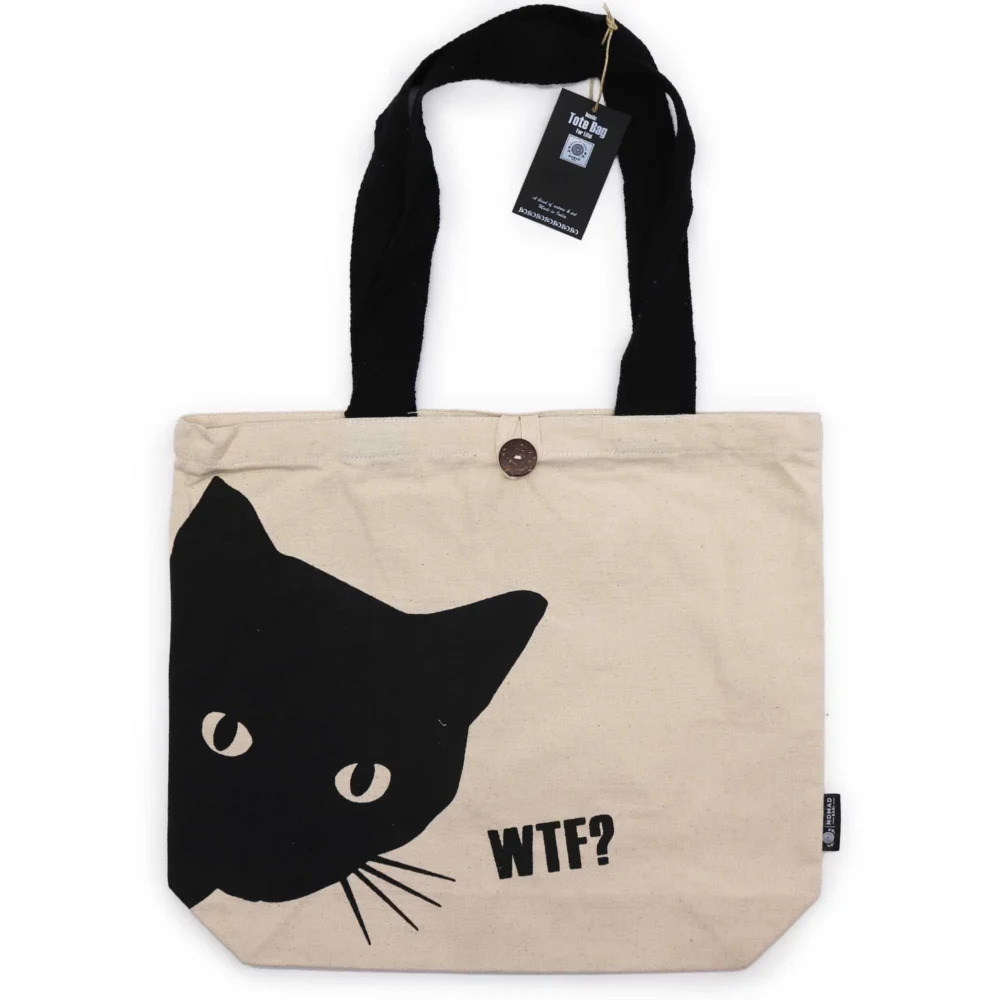
To understand why we are so obsessed with the aesthetics of our bags today—from quirky “WTF?” Cat Totes to intricate Mushroom Felt bags—we have to look back to when a bag was a life-saving piece of technology.
Archaeological evidence suggests that bags existed long before we had settled homes. If you were a nomad 10,000 years ago, your “inventory” was limited by what you could physically carry while keeping your hands free for hunting or climbing. The earliest bags were simple pouches made from animal bladders, skins, or woven grasses.
The famous “Iceman” Ötzi, discovered in the Alps, was found with a clever kit including a pouch attached to his belt. This was the original “utility bag,” containing flint, bone tools, and medicinal fungi. Much like the first item in an adventure game, Ötzi’s holdall defined his capability to survive the elements.
The Middle Ages: The Pouch as a Pocket
For centuries, clothing didn’t actually have pockets. If you look at medieval tapestries, you won’t see people with their hands in their trousers. Instead, men and women alike wore purses or scrip—small bags that hung from a belt or a cord around the neck.
This era saw the bag become a status symbol. A merchant might carry a sturdy leather pouch for coins, while a noblewoman might carry an embroidered silk bag for lavender or personal trinkets. This is where the “size range” began to diversify. We moved from “one-size-fits-all” survival sacks to specialized carries.
The Great Evolution: From Food to Fiber Optics
The most fascinating part of the bag’s history is how the content has dictated the form.
- The Food Phase: For the vast majority of history, bags were for forage. Whether it was grain, dried meat, or gathered berries, the bag was a stomach outside the body.
- The Industrial Phase: As we moved into cities, we needed to carry “business.” This gave birth to the briefcase and the structured satchel.
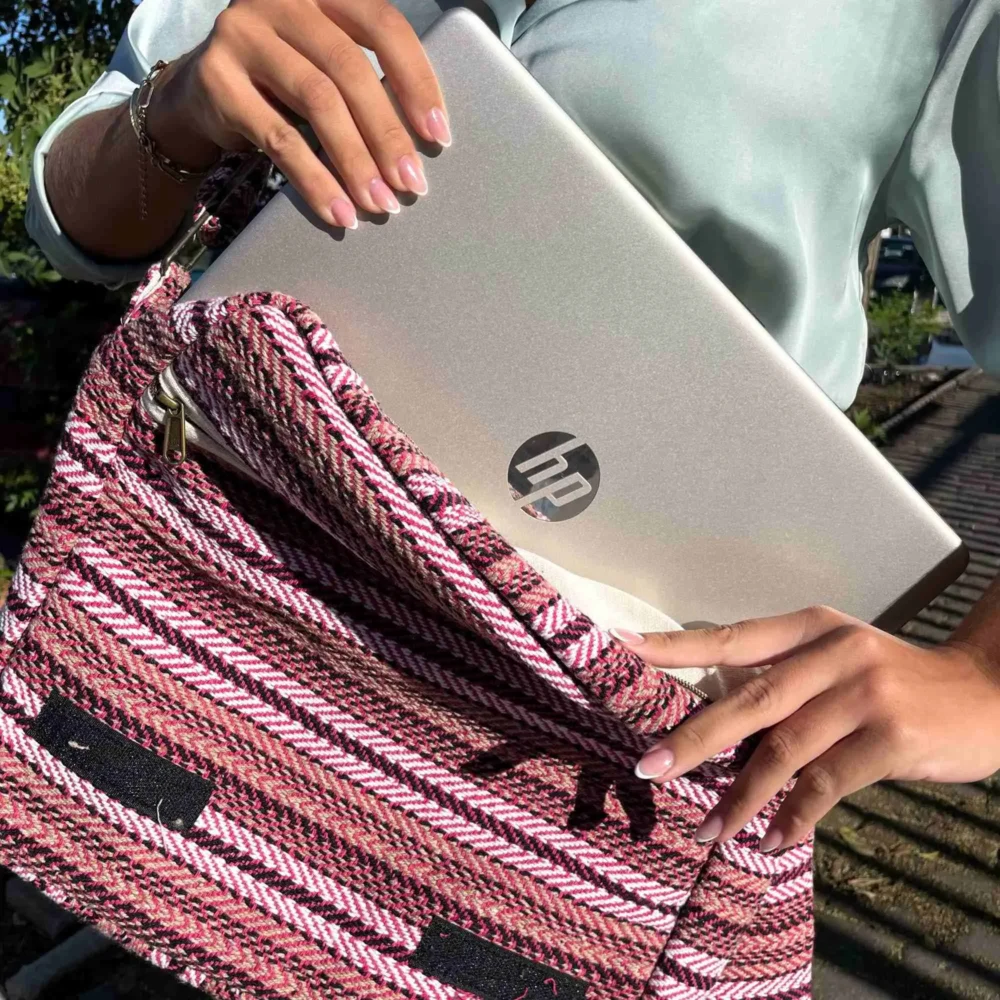
- The Digital Phase: Enter the 21st century. We no longer carry flint or large amounts of cash. We carry Laptops, Tablets, and Smartphones.
The modern Laptop Satchel is a marvel of engineering. It requires “Anti-Shock” padding, “RFID-blocking” pockets, and specialized compartments for cables. Yet, as our technology becomes more sterile and “corporate,” our desire for “Funky” aesthetics has grown. We want the protection of a modern tech-Satchel , but we want the soul of a festival-ready Hippie Peace Patchwork carry. We want to carry our MacBook in something that looks like it has a story to tell.
The Size Spectrum: Finding Your “Gear Tier”
In any good adventure, you upgrade your bag as you go. You start with a small pouch and end with a massive rucksack. In the modern world, we use different “tiers” of bags for different daily quests.
The Tech-Tote (The Modern Hybrid): The evolution of the cat-themed tote (like our WTF? Cat Bag) into something that can actually hold a 13-inch laptop is the ultimate sign of our times. It’s quirky, it’s light, but it’s functional.e.
The Wallet/Purse (The Micro-Tier): For the essentials—IDs, cards, and keys. Our Mushroom and Bee Felt Tote fits into this “artisanal” category where the bag is as much a piece of jewelry as it is a container.
The Tote/Crossbody (The Mid-Tier): This is the daily driver. It’s for the book you’re reading, your water bottle, and your “just in case” items. Bags like the Wandre Muse Natural Bag offer that perfect balance of “Eco-Chic” and practical volume.
The Gym/Duffle Bag (The Heavy-Tier): When the quest involves a change of clothes or sports equipment, you need the “Heavy” inventory. The “DON’T QUIT” Red Duffle is built for the grind, providing the structural integrity needed for the gym or a long-distance flight.
| Era | Primary Material | Primary Content | Common Style | Adventure Game Equivalent |
| Pre-Historic | Animal Skin / Grass | Flint, Dried Meat, Herbs | Waist Pouch | Starter Pouch (5 Slots) |
| Medieval | Leather / Silk | Coins, Religious Relics | Belt Scrip / Pouch | Gold Pouch |
| Industrial | Heavy Canvas / Iron | Paperwork, Tools, Lunch | Satchel / Haversack | Tool Kit |
| 1960s-70s | Patchwork / Hemp | Records, Books, “Vibes” | Crossbody / Messenger | Festival Inventory |
| Modern Day | WebP/Nylon/Felt | Laptops, Chargers, Skincare | Tech-Tote / Gym Bag | End-Game Inventory (Unlimited) |
QandA: Everything You Need to Know About the “Carry”
Q: Why do we call the bag the “first item” in an adventure game? A: Because without an inventory system, the game mechanics can’t function. You can’t collect items, upgrade gear, or manage resources. In life, the bag is your “external brain”—it stores everything you can’t hold in your head or your hands.
Q: Is felt a durable material for a modern bag? A: Surprisingly, yes! High-quality wool felt (like in our Mushroom Tote) is naturally water-resistant and incredibly sturdy. It provides a “cushion” effect that makes it great for protecting delicate items while maintaining a handcrafted, organic look.
Q: What is the most “modern” feature of a bag today? A: It’s the transition from “volume” to “organization.” Old bags were just big holes you threw things into. Modern bags, like the Wandre Muse, focus on dedicated compartments so you don’t lose your keys at the bottom of your laptop section.
Q: How do I choose between a Tote and a Duffle? A: It’s all about the “Quest Duration.” A Tote is for a 4-8 hour daily mission (work, coffee, shopping). A Duffle is for a 24-48 hour adventure (gym, overnight stay, or a mini-break).
Q: Why the “WTF?” Cat and quirky designs? A: In a world of mass-produced corporate gear, quirky designs are a way to “re-skin” your character. It’s a way to say, “I have a professional life, but I haven’t lost my sense of humor.”
Conclusion: The Adventure Continues
From the moment you pick up your Satchel in the morning, you are equipping yourself for the day’s narrative. Whether you are carrying a tarot deck, a gym kit, or a high-powered laptop, the holder you choose is the most important “stat” in your inventory.
Choose a holdall that fits your quest—whether that’s a small handcrafted felt piece or a bold, statement duffle. After all, you can’t save the world if you have nowhere to put your stuff.
Ready to upgrade your inventory? Explore the FunkyStride collection of bags—designed for every tier of your adventure.